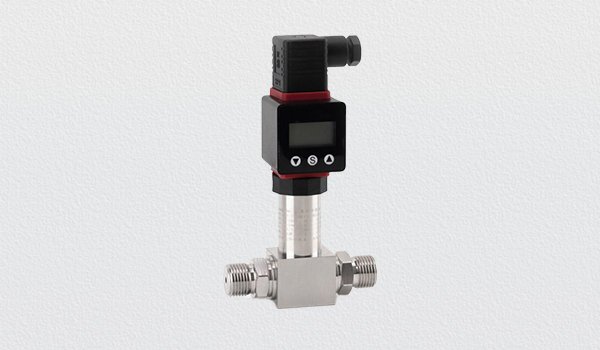
Working Principle of the Differential Pressure Transmitter
Publication date:2026-10-13 00:18
Simply put, the core working principle of a differential pressure transmitter is: measure the pressure difference between two different points, and convert this physical pressure difference into a standardized electrical signal (such as 4-20mA) or digital signal for output.
Let us explain it in detail step by step below:
I. Core Components
A typical differential pressure transmitter usually contains three main parts:
Pressure sensing element (core): this is the part that directly senses the pressure on both sides, usually an isolation diaphragm and an oil-filled capillary system.
Signal conversion and amplification circuit: converts the tiny changes detected by the sensing element into a strong electrical signal.
Process connections: such as flanges and threads, used to connect the transmitter to the equipment to be measured (such as pipes and tanks).
II. Detailed Working Process (taking the most common capacitive principle as an example)
Step 1: Pressure introduction and isolation
The transmitter has two pressure ports, marked respectively as the high-pressure side (H, High Pressure) and the low-pressure side (L, Low Pressure).
These two pressures act, through the process connections, on the isolation diaphragms on both sides of the transmitter. These diaphragms are very sturdy and can withstand the corrosion, high temperature or solidification of the process medium.
The space between the isolation diaphragms and the central sensing element is filled with incompressible silicone oil, which serves to transmit pressure and protect the core element.
Step 2: Conversion of differential pressure into displacement
The high pressure (P₁) and low pressure (P₂) act on the isolation diaphragms on both sides respectively.
The pressure difference ΔP = P₁ - P₂ causes the filled silicone oil to move.
The movement of the silicone oil pushes an elastic element known as “center pressure-sensing diaphragm”(or measuring diaphragm). This diaphragm is located between two fixed capacitor plates.
If P₁ = P₂ (differential pressure is zero), the center diaphragm remains in the middle position.
If P₁ > P₂, the center diaphragm will undergo a small, proportional deformation (displacement) toward the low-pressure side (L).
If P₁ < P₂, the center diaphragm will deform toward the high-pressure side (H).