What Types of Level Sensors Are There and How to Select Them?
Publication date:2026-10-13 00:18
A level sensor is a device used to detect, measure and monitor the surface height of liquids, solids or slurries. According to the measurement principle and application scenarios, level sensors can be mainly divided into two categories: contact type and non-contact type.
I. Contact-Type Level Sensors
The sensing part of this type of sensor needs to be in direct contact with the measured medium.
1. Float-Type Level Sensor
Working principle: based on Archimedes' principle of buoyancy. Inside the sensor there is a float that moves up and down as the liquid level changes. This mechanical movement can be converted into an electrical signal (such as a switch signal or a continuous signal) by magnetic, mechanical or resistive means.
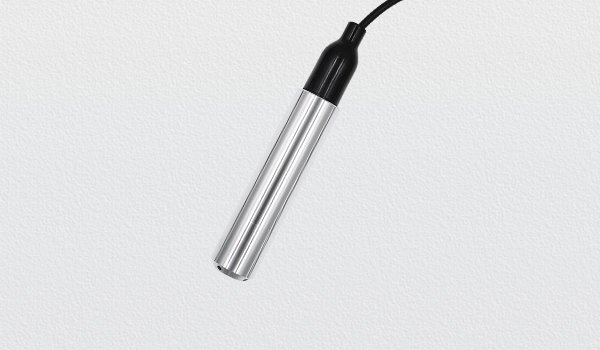
2. Hydrostatic (Submersible) Level Sensor
Working principle: based on the principle of hydrostatics, i.e. the static pressure at a point in a liquid is proportional to the height of the liquid column above that point. The sensor is submerged at the bottom of the liquid, measures the static pressure generated by the liquid, and then converts it into a liquid level height according to the liquid density.
3. Capacitive Level Sensor
Working principle: the sensor probe and the container wall are regarded as the two plates of a capacitor, with air and liquid as the medium in between. A change in liquid level causes a change in the dielectric constant, which in turn changes the capacitance value; the liquid level height can be determined by measuring the capacitance value.
4. Ultrasonic Level Sensor (Contact Type)
Note: ultrasound is usually non-contact, but there is also a guided wave radar (GWR) or contact-type ultrasonic sensor whose probe extends into the medium. It emits high-frequency pulses along a rod or cable; the pulses reflect after reaching the liquid surface, and the distance is measured by calculating the time difference.
II. Non-Contact Level Sensors
This type of sensor does not contact the measured medium and is usually installed at the top of the container.
1. Ultrasonic Level Sensor (Non-Contact Type)
Working principle: the sensor emits ultrasonic pulses toward the liquid surface and receives the echoes reflected back from the liquid surface. By calculating the time difference between ultrasonic transmission and reception and combining it with the speed of sound, the distance from the sensor to the liquid surface is calculated, thereby obtaining the liquid level height.
2. Radar Level Sensor (Microwave)
Working principle: similar to ultrasonic, but it emits high-frequency electromagnetic waves (microwaves). Electromagnetic waves travel at the speed of light and reflect upon reaching the liquid surface; the distance is measured by measuring the travel time of the microwaves.
3. Laser Level Sensor
Working principle: similar to radar and ultrasonic principles, but it emits a laser beam. The distance is measured by measuring the time difference between the emission of the laser beam and its reflection back.
4. RF Admittance Level Switch
Working principle: this is a point-level measurement switch, not a continuous measurement. It determines whether the probe is covered by the medium by detecting the change in RF admittance between the probe and the container wall, thereby outputting a switch signal (high/low alarm).
Summary and Selection Guide
When selecting a level sensor, the following key factors need to be considered:
|
Factor |
Considerations |
|
Medium properties |
Liquid, solid or slurry? What about corrosiveness, viscosity, density and dielectric constant? Is there foam, dust or vapor? |
|
Measurement requirements |
Continuous measurement or point alarm? What level of accuracy and resolution is required? |
|
Process conditions |
What are the temperature and pressure ranges inside the container? Is there agitation, wave motion or turbulence? |
|
Installation environment |
Top mounting, side-wall mounting or bottom mounting? Are there space constraints? Is explosion-proofing required? |
|
Output signal |
Do you need an analog signal (4-20mA, 0-10V) or a digital signal (RS485)? Or only a switch signal? |
|
Budget cost |
Including procurement cost, installation cost and maintenance cost. |