Tunnel Portal Landslide Safety Monitoring Solution
Publication date:2026-10-13 00:19
A tunnel portal is a typical “cutting + slope” composite structure, and affected by vehicle dynamic loads, rainwater infiltration and geological structures it is highly prone to sudden landslides. Once displacement occurs, the “golden window” left for rescue and control is often extremely short. Traditional manual inspection is not only inefficient but impossible to carry out up close in severe weather, so an automated, wireless and intelligent monitoring system is urgently needed to fill the early-warning blind spots.
 | Application Challenges
1. Difficult power supply and cabling in extreme environments: tunnel portals are located in remote mountainous areas where bringing in mains electricity is extremely costly, and the slope surface is severely weathered, so wired cabling not only damages the original mountain structure but is also easily severed by falling rocks, paralyzing the system.
2. High humidity and strong interference cause data drift: the fast air flow and high humidity at tunnel portals, combined with electromagnetic interference from passing vehicles, easily cause zero-point drift in ordinary sensors and frequent false alarms, giving managers a “boy who cried wolf” mentality of numbness.
3. Scattered monitoring points and poor real-time performance: landslide risk often starts from a slight tilt angle. Traditional manual measurement has long intervals (once every few days) and cannot capture the instantaneous acceleration of deformation, let alone trigger automatic alarms on a stormy night.
4. High equipment maintenance costs: ordinary external battery solutions see their endurance drop sharply at low temperatures, and frequent battery replacement not only increases O&M costs but also exposes maintenance workers climbing the mountain to secondary disaster risks.
| Solutions
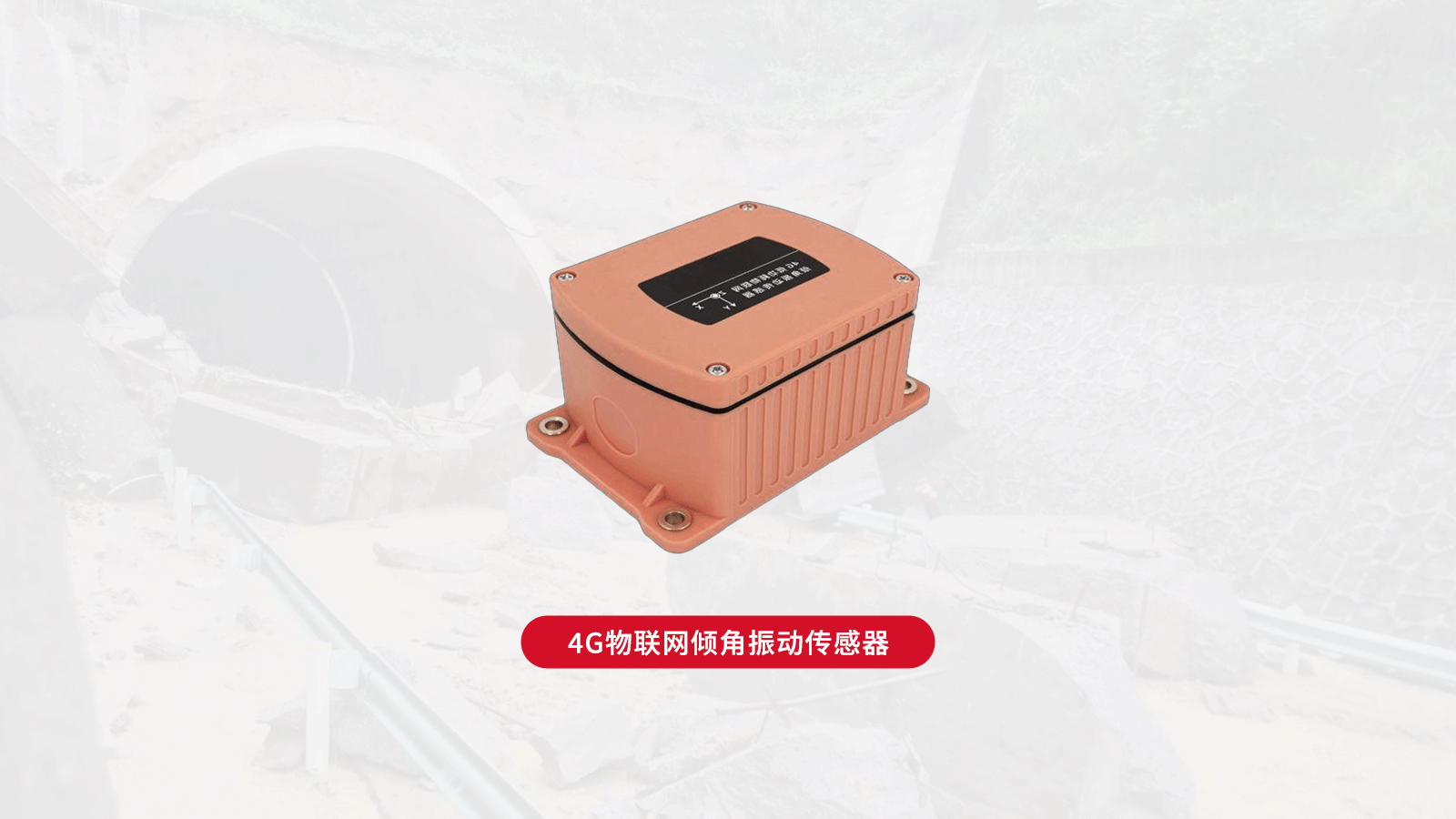
To address the above, winchen sensor presents a dedicated tunnel portal landslide monitoring solution based on NB-IoT/4G wireless tilt sensors. The solution uses high-precision triaxial tilt sensors as the core sensing layer and combines low-power wide-area communication with cloud AI algorithms to achieve full-process closed-loop monitoring.
1. Ultra-low-power design and smart power supply: A built-in 19AH large-capacity lithium sub-battery plus a low-power operating mechanism (standby power consumption down to the microamp level). In scheduled reporting mode (for example 12 times a day), endurance can reach 3-5 years, completely solving the pain points of difficult power access and troublesome battery replacement at tunnel portals.
2. High vibration resistance and IP67/IP68 protection rating: A potting compound process and a fully metal-shielded housing effectively suppress temperature drift and vehicle vibration interference. Even in extreme cold of -20℃ or when soaked by rainstorms, it still outputs real physical quantities stably.
3. Intelligent edge computing: Embedded algorithms are built into the sensor, supporting user-defined angle over-limit reporting;
| Benefits and Results
1. Personal safety assured: 24-hour unattended operation means managers no longer need to risk entering high-risk slope areas for visual inspections during rainstorms or aftershocks, achieving zero safety incidents;
2. Faster early warning: Upgraded from “day-level” manual inspection to “second-level” data reporting.
3. Lower overall O&M costs: It eliminates the cost of laying power lines and fiber optic construction (saving about 60% of construction cost). The extremely long battery life means annual maintenance costs are only 1/5 of those of traditional wired solutions.
4. Accumulated data assets: Long-term historical tilt data can generate deformation trend curves, helping geological experts analyze the creep pattern at the tunnel portal and providing a precise data basis for subsequent reinforcement works.