High-power Liquid-cooled Charging Pile Sensor Solutions
Publication date:2026-10-13 00:19
In the era of high-power fast charging, why has thermal management become a “bottleneck” problem?
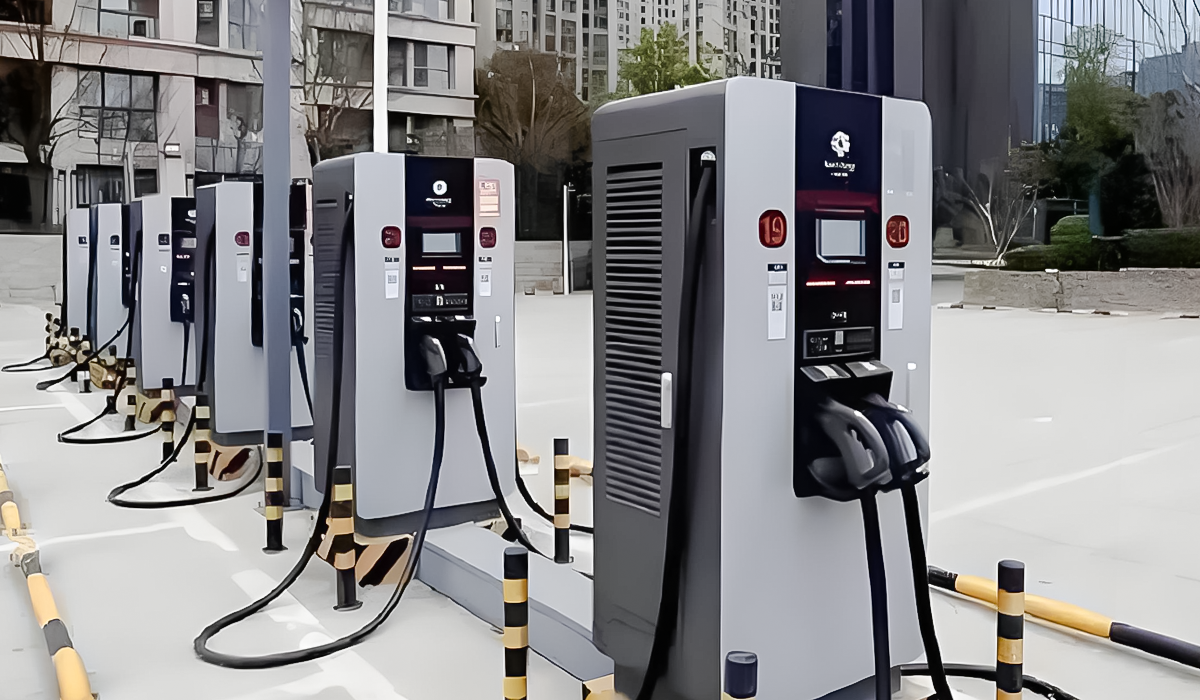
With the large-scale deployment of 800V high-voltage platforms and high-power liquid-cooled ultra-fast charging piles of 480kW and above, the leap in charging power has brought unprecedented thermal management challenges. Traditional air cooling can no longer support the heat dissipation needs of hundreds-of-kilowatts charging conditions, and although liquid cooling systems dissipate heat more efficiently, they also impose stringent requirements on sensing and monitoring.
| Application Challenges
1. Risk of sensor failure under extreme conditions
Charging piles are exposed for long periods to complex natural environments such as high temperature, high humidity and heavy rain, placing extremely high demands on sensor adaptability, accuracy, response speed and long-term stability. Prolonged contact with coolant also corrodes sensors, and ordinary sensors struggle to operate reliably under such conditions.
2. Signal distortion under strong electromagnetic interference
With power levels of hundreds of kilowatts, liquid-cooled ultra-fast charging piles generate extremely strong electromagnetic interference. Sensor signals are highly susceptible to contamination in strong electromagnetic fields, distorting critical data such as temperature, pressure and level, which in turn causes system misjudgment and even protective shutdowns.
3. The dual safety hazards of thermal runaway and coolant leakage
During high-power charging, if temperature monitoring is not timely, pressure is out of control or coolant is insufficient, the consequences range from a sharp drop in charging power and degraded equipment performance to thermal runaway and even safety incidents. Once coolant leaks, it may cause severe damage to core components such as power modules and liquid-cooled charging cables.
| Solutions
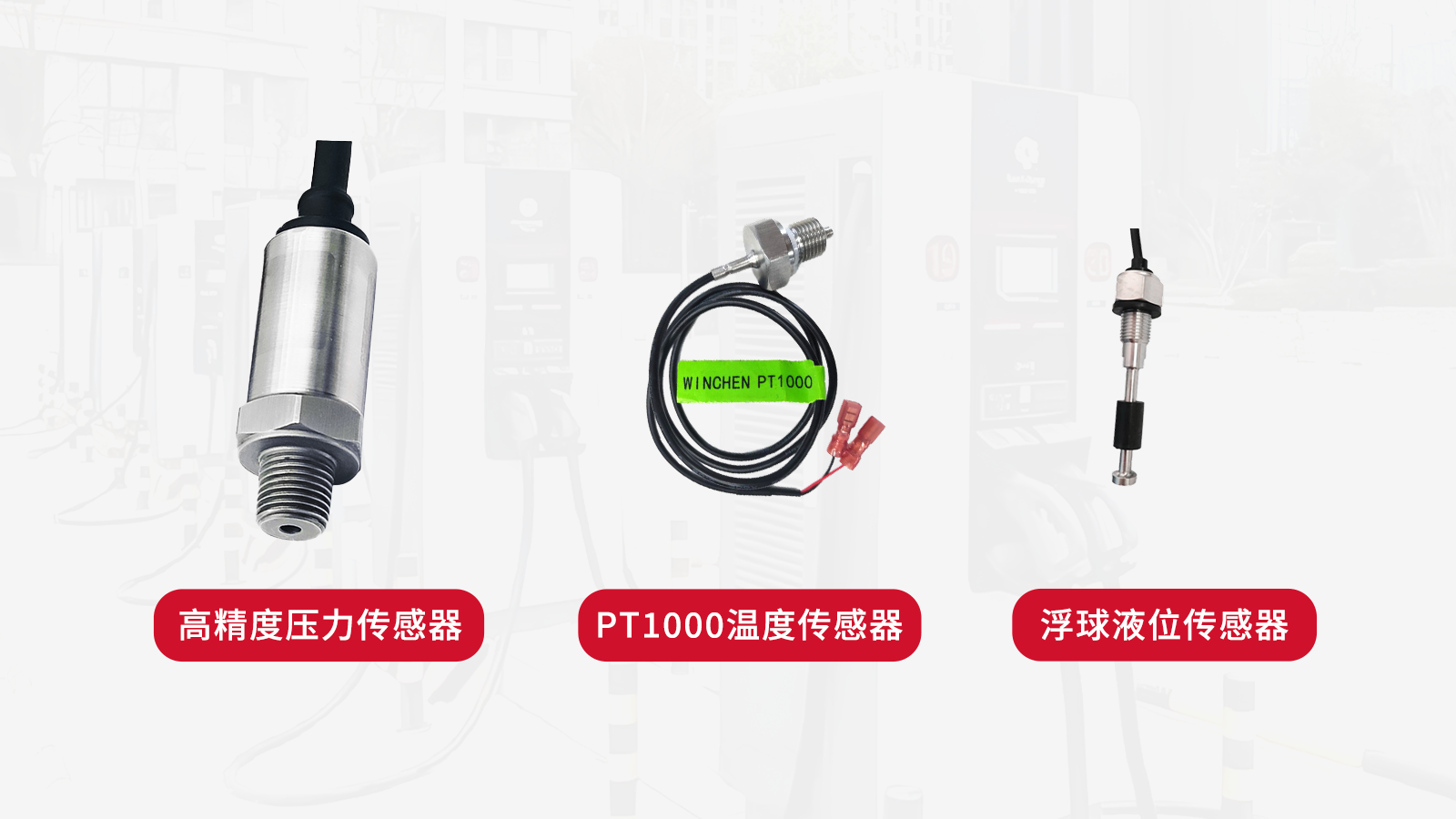
For the demanding working conditions of high-power liquid-cooled charging piles, winchen sensor presents a complete solution made up of three core sensors for temperature monitoring, pressure control and level warning, working together to safeguard the efficiency and safety of the charging process.
1) PT1000 temperature sensor——— the thermal management “thermometer”
: designed specifically for monitoring the inlet and outlet water temperature of liquid-cooled ultra-fast charging, it uses a PT1000 platinum resistance design with a temperature measurement range of -40℃ to 150℃. Its fast response allows it to sense subtle changes in coolant inlet and outlet temperature in real time, providing a precise basis for the control system to adjust heat dissipation power. The sensor uses an immersion or sheathed sealed design that effectively prevents coolant ingress and resists corrosion and pressure.
2) Stainless steel pressure sensor——— the liquid cooling system's “blood pressure monitor”
: it uses a stainless steel isolation diaphragm design with excellent pulsation impact resistance, specifically addressing post-pump pressure detection. It monitors liquid cooling line pressure in real time——. Excessive pressure risks bursting and leakage, while pressure that is too low means insufficient flow and reduced heat dissipation efficiency. By feeding back pressure difference data in real time, it helps the control system automatically adjust pump speed for on-demand cooling.
3) Float level sensor——— the “goalkeeper of coolant safety”
: installed inside the expansion tank, it monitors the coolant level for low-limit alarm purposes. When the coolant drops below the safe line due to slow leakage or natural loss, it issues an early warning immediately, avoiding overheating protection shutdowns or equipment damage caused by insufficient coolant.
System integration advantages:
Flexible communication: supports RS485, 4-20mA and other output options and connects directly to BMS (battery management system);
Strong interference resistance: EMC immunity means it still outputs precise signals stably in strong electromagnetic environments at the hundreds-of-kilowatts level;
Market-proven: already in volume use by more than 5 ultra-fast charging brands, with reliability that stands up to market testing;
| Benefits and Results
1. Moving the safety line forward, from “post-event remediation” to “pre-event warning”
: by monitoring the three key parameters of temperature, pressure and level in real time, the system can issue warnings at the earliest stage of an anomaly. When the PT1000 detects that temperature exceeds the threshold, the charging pile management system can promptly raise an alarm, automatically reduce power or stop charging, avoiding equipment damage and safety hazards. The level sensor gives early warning when coolant is insufficient, turning “repair after failure” into “predictive maintenance.”.
2. O&M efficiency leaps, downtime greatly reduced
Precise sensor data makes fault localization clearer, so maintenance staff can bring the right tools and spare parts and resolve issues in one visit, cutting mean time to repair (MTTR) from several hours under the traditional model to within 2 hours. winchen sensor products use advanced manufacturing processes and have undergone rigorous verification including long-term aging tests, spray tests and high-temperature tests, offering long life and high reliability that significantly reduce maintenance costs and unplanned downtime.
3. Optimized charging efficiency and higher equipment availability
Precise temperature and pressure feedback lets the liquid cooling system adjust heat dissipation power on demand, avoiding the energy waste of over-cooling and preventing the sharp drop in charging power caused by insufficient cooling. Equipment availability and user satisfaction rise accordingly.
4. Lower total lifecycle costs
Precise monitoring prevents coolant-related damage to core components such as power modules and liquid-cooled charging cables, greatly reducing potential high replacement costs. Shifting from reactive repair to proactive maintenance significantly lowers long-term O&M costs.