| Application Challenges
1. Loss of control over adhesive volume consistency
Within the same batch of products, dispensed dots vary in size and line widths are sometimes wide and sometimes narrow, with stringing, tailing, missing adhesive or overflow even occurring. The root causes lie in air path pressure fluctuations, changes in the adhesive volume inside the cartridge or delayed valve response, and traditional open-loop control cannot perceive these dynamic deviations.
2. Dispensing position offset
Dispensed dots fail to land precisely on the target coordinates, causing sealing failure, poor electrical connections or cosmetic defects. Fixture positioning deviation, mechanical wear or inaccurate homing can all cause the dispensing head to “drift off course”, and micron-level offsets are hard to detect with the naked eye.
3. Process parameters cannot be monitored or traced in real time
In the past, reliance on manual visual inspection or offline sampling meant defective products could easily flow into subsequent processes, causing greater rework costs. More seriously, once a batch quality incident occurs, it is impossible to trace back the pressure, speed, position and other key parameters of each dispensed dot at the time, making it difficult to pinpoint the cause.
| Solutions:
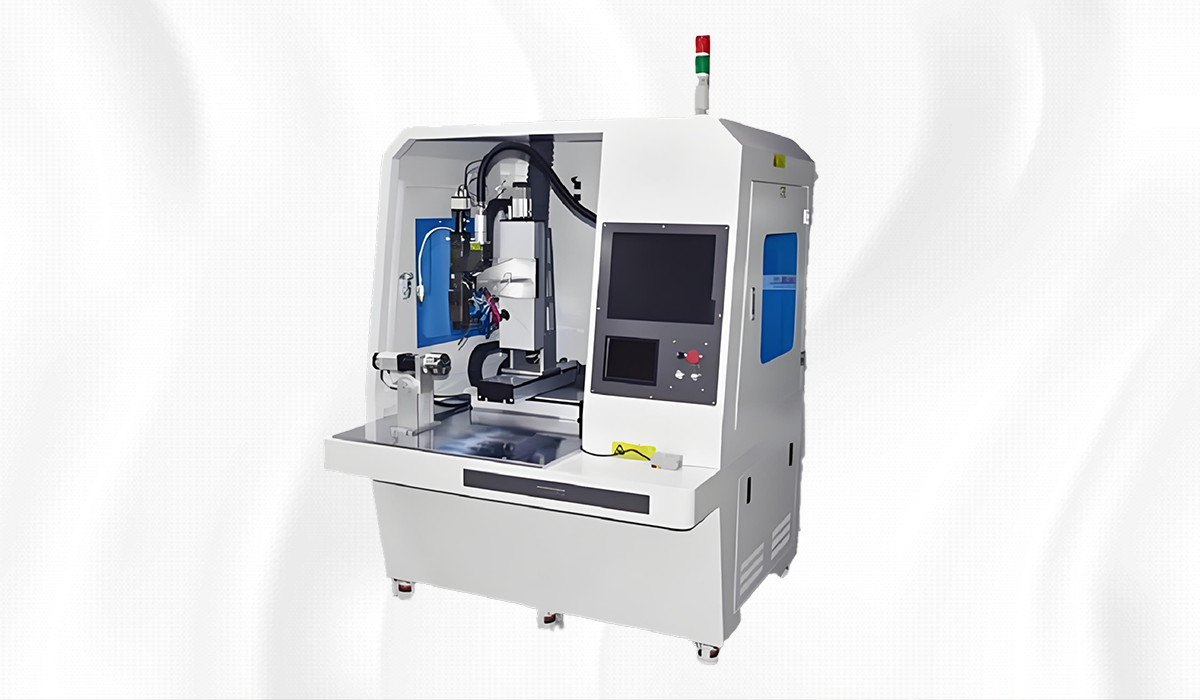
Tailored to the working conditions of dispensing machines, three highly reliable sensors are customized and deployed respectively at three key points — air path pressure, position triggering and motion detection — forming a closed loop of “sense - feedback - actuate”.
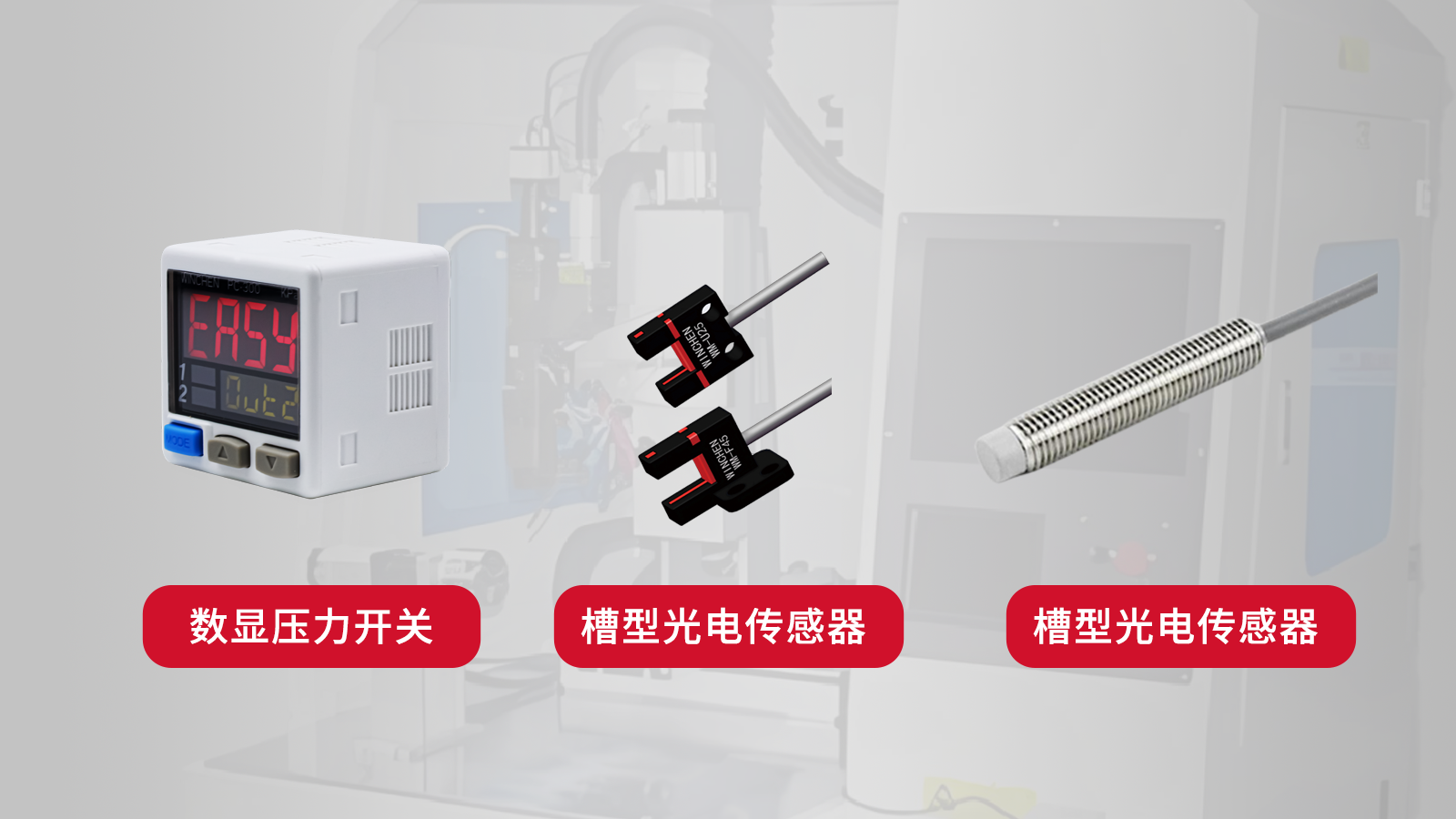
1) Digital display pressure sensor —— — the “real-time dashboard”
: it is installed on the air inlet line of the adhesive cartridge or dispensing valve, converting air pressure signals into electrical signals and displaying the current pressure value digitally in real time. It supports switching or analog outputs (such as 4-20mA, 0-10V) and can connect to a PLC or industrial PC. By monitoring air pressure in real time, the system can detect pressure anomalies promptly and adjust automatically or raise an alarm, ensuring consistent adhesive output from the source.
2) Proximity sensor —— — the “precise sentinel”
for position triggering: it is installed on the dispensing head's moving axis or the workpiece fixture for non-contact detection of whether a metal workpiece has reached the predetermined position, triggering the start of dispensing or confirming arrival. This sensor effectively eliminates position offsets caused by fixture displacement or mechanical homing errors, making it the first line of defense for dispensing position accuracy.
3) Slot-type photoelectric sensor —— — the “precise referee”
for the motion process: it is installed along the dispensing head's movement path or the workpiece transfer line with a U-shaped structure and the emitter and receiver facing each other. When a detected object (such as the dispensing needle, workpiece edge or a light-blocking tab) passes through the slot, the light beam is blocked and the receiver outputs a switching signal used for presence detection, counting or position determination. This sensor is used to check whether the dispensing needle has returned to zero, whether the workpiece is in position and whether droplets are missed, providing real-time feedback for motion control.
System integration features: all three sensors can flexibly output NPN/PNP switching or analog signals, with standard interfaces compatible with mainstream controllers for plug-and-play use, reducing commissioning difficulty.
| Benefits and Results
1) Adhesive volume consistency greatly improved and reject rate plunges: the pressure sensor adjusts the air path in a real-time closed loop, keeping adhesive output fluctuation within±1%, completely eliminating stringing and missing adhesive, and cutting the dispensing defect rate from 3.2% to below 0.5%.
2) Zero dispensing position offset, eliminating sealing failure: the proximity sensor and slot-type photoelectric sensor provide dual positioning, ensuring the dispensing start position is precisely consistent every time, with repeatability of±0.02mm. Even if the workpiece shifts slightly, the system can automatically detect it, pause and raise an alarm, avoiding batch scrap.
3) Traceable process parameters supporting digital management: Real-time sensor data is uploaded to the system, recording the pressure, position and time parameters of every dispensed dot. When an anomaly occurs, the batch can be traced back quickly to pinpoint the cause precisely, saving 70% of troubleshooting time.
4) Higher equipment utilization and lower maintenance costs: Early warning of pressure anomalies or sensor failures turns “unplanned downtime” into “planned maintenance”, raising overall equipment effectiveness (OEE) by 15%~20%.