Sensor Solutions for Pharmaceutical and Bioprocess Monitoring
Publication date:2026-10-13 00:19
In the pharmaceutical and biotechnology fields, sensor instruments are the sensory organs for achieving process control, quality assurance (GMP), safety and data integrity“sensory organs”. Their role goes far beyond simple monitoring: they provide tamper-proof electronic data for GMP records, prevent dangerous situations such as overpressure, overtemperature, overflow and dry burning, reduce energy and material waste through precise control and optimize production cycles, etc.; they are the foundation for achieving automation, intelligence and compliance.
Requirements for sensors in pharmaceutical and biotechnology processes:
1. Hygienic design: easy to clean, no dead corners, using 316L stainless steel, flush diaphragms, sanitary clamps and other connections.
2. High accuracy and reliability: measurement deviation may cause an entire batch of products to fail inspection.
3. CIP/SIP resistance: able to withstand repeated impact from high-temperature, high-pressure steam sterilization and corrosive cleaning agents.
4. Calibration and validation: perform calibration regularly, and demonstrate that performance meets requirements in equipment qualification (IQ/OQ/PQ) and process validation.
5. Signal output and integration: standard signals (4-20mA, Modbus) facilitate connection to the control system.
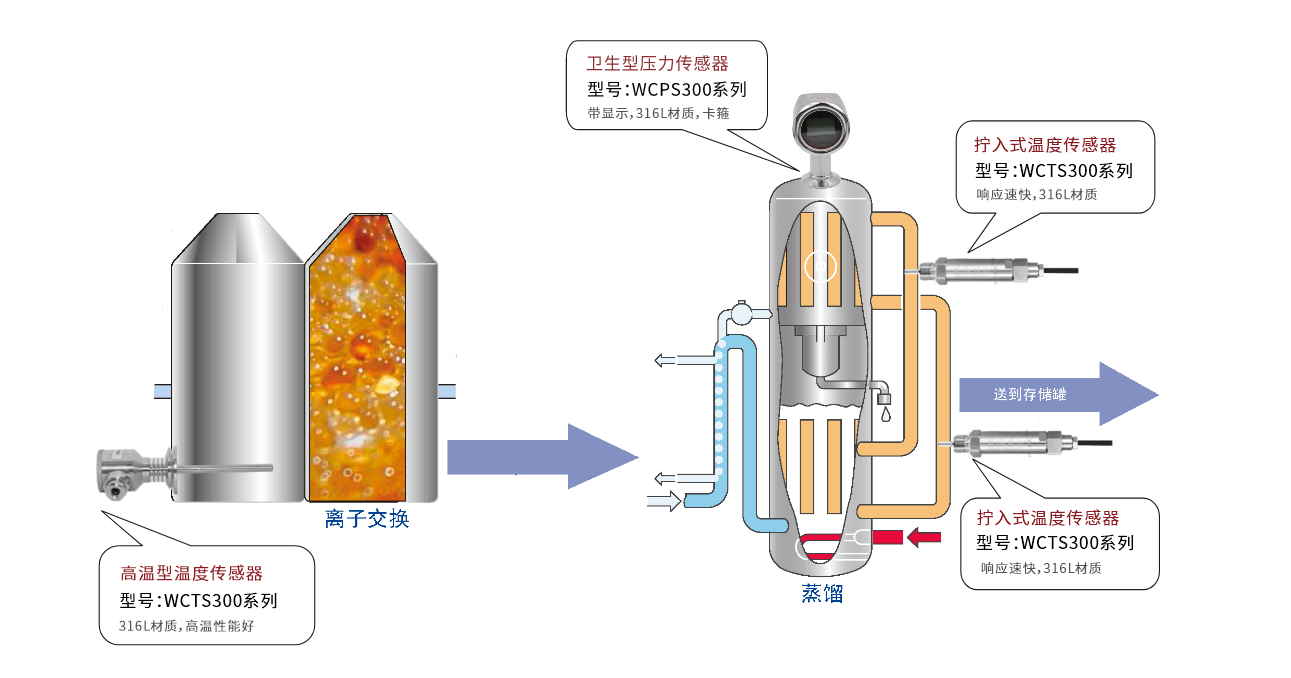
I. Distillation (temperature and pressure monitoring during distillation)
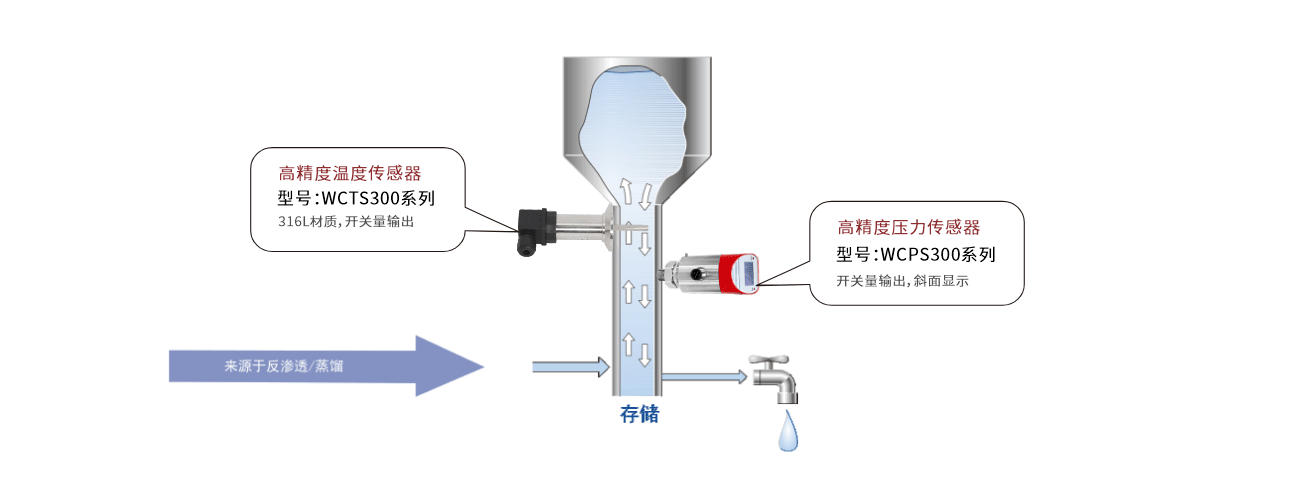
II. Water Storage (liquid level and temperature monitoring and control in water tanks)
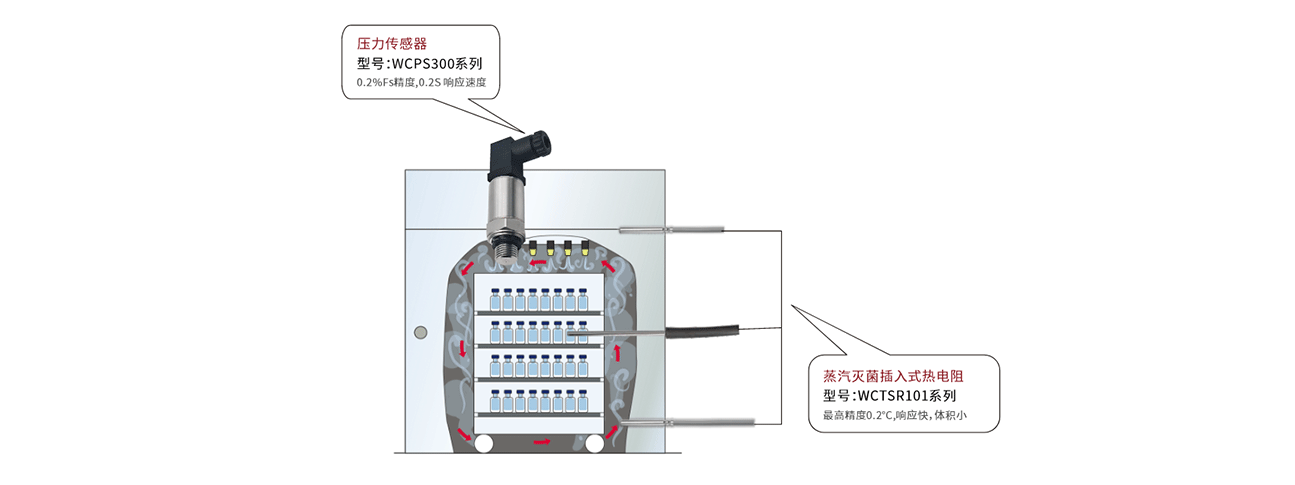
 III. Disinfection (reliable measurement of pressure and temperature)
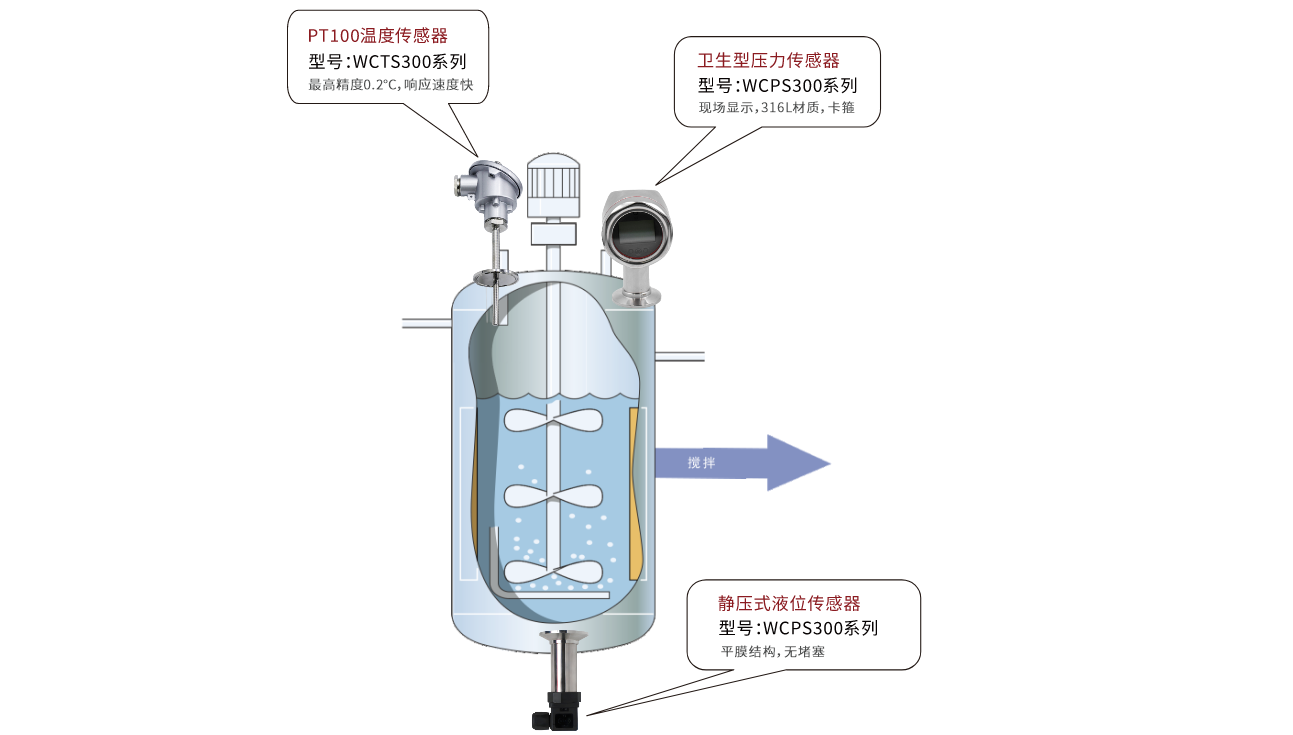
IV. Fermentation (monitoring of pressure, temperature and liquid level in biological additive production)
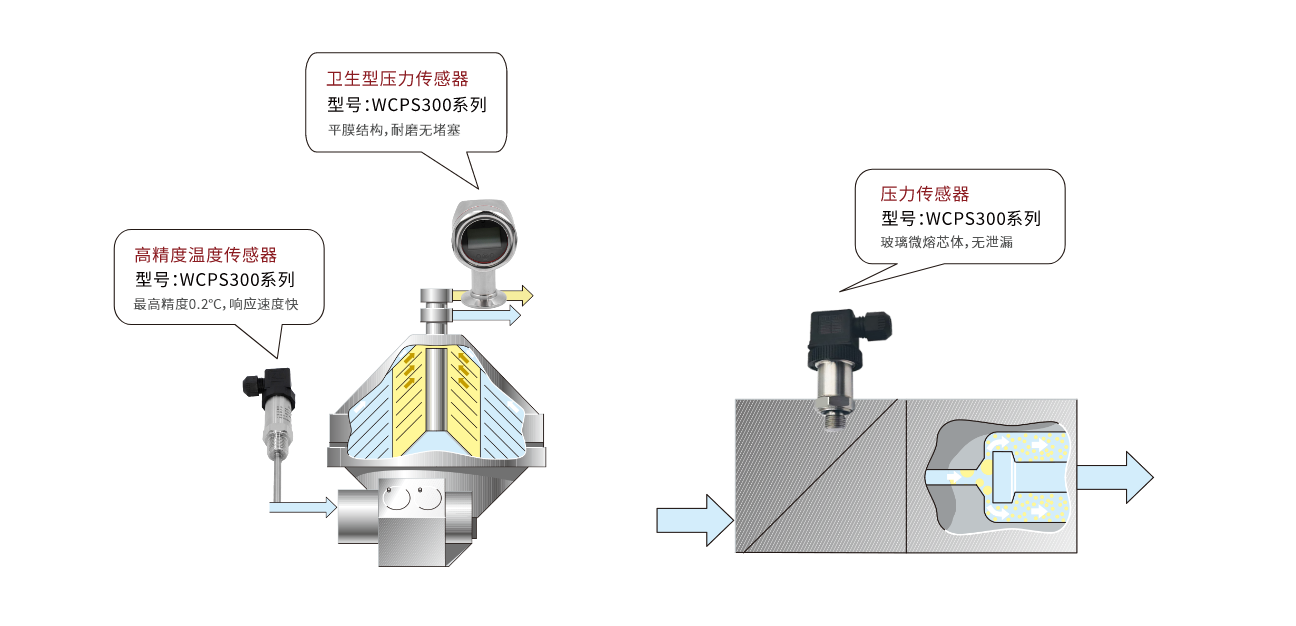
V. Output (monitoring pressure after separation)
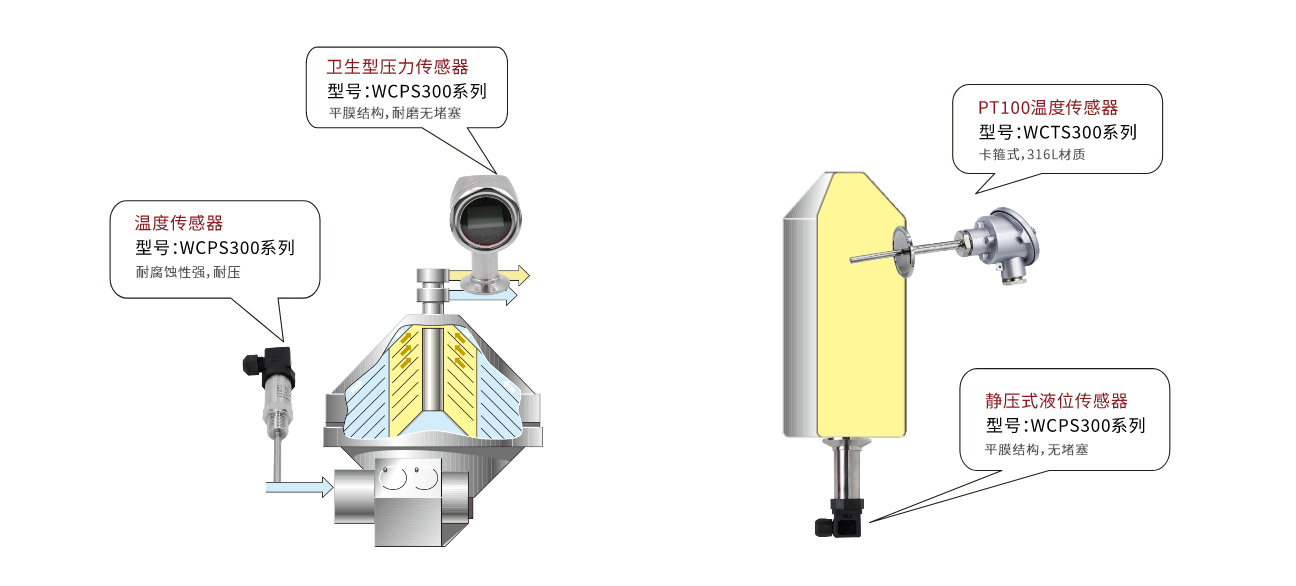
VI. Cleaning and Collection (monitoring of separator pressure and temperature, and liquid level and temperature in collection tanks)
 VII. Drying (freeze drying, spray drying, fluidized bed drying monitoring of temperature, temperature and humidity, and pressure)
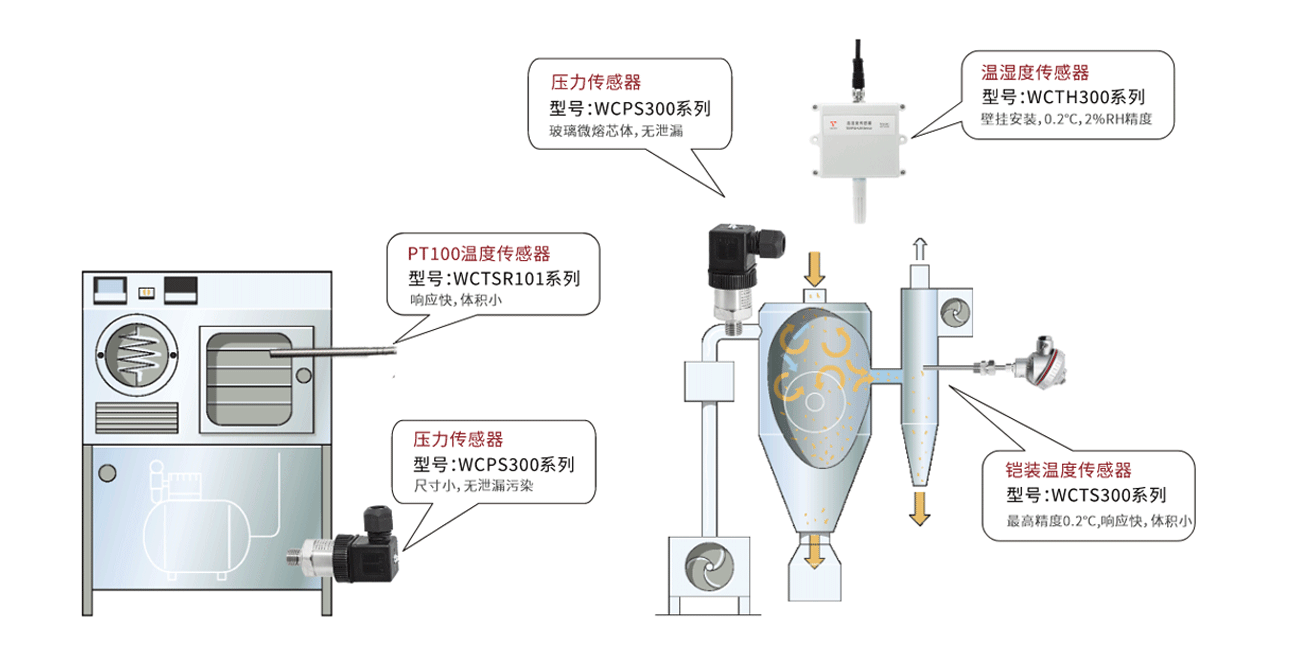 VIII. Granulation and Coating (monitoring of pressure, temperature and humidity during granulation and coating)
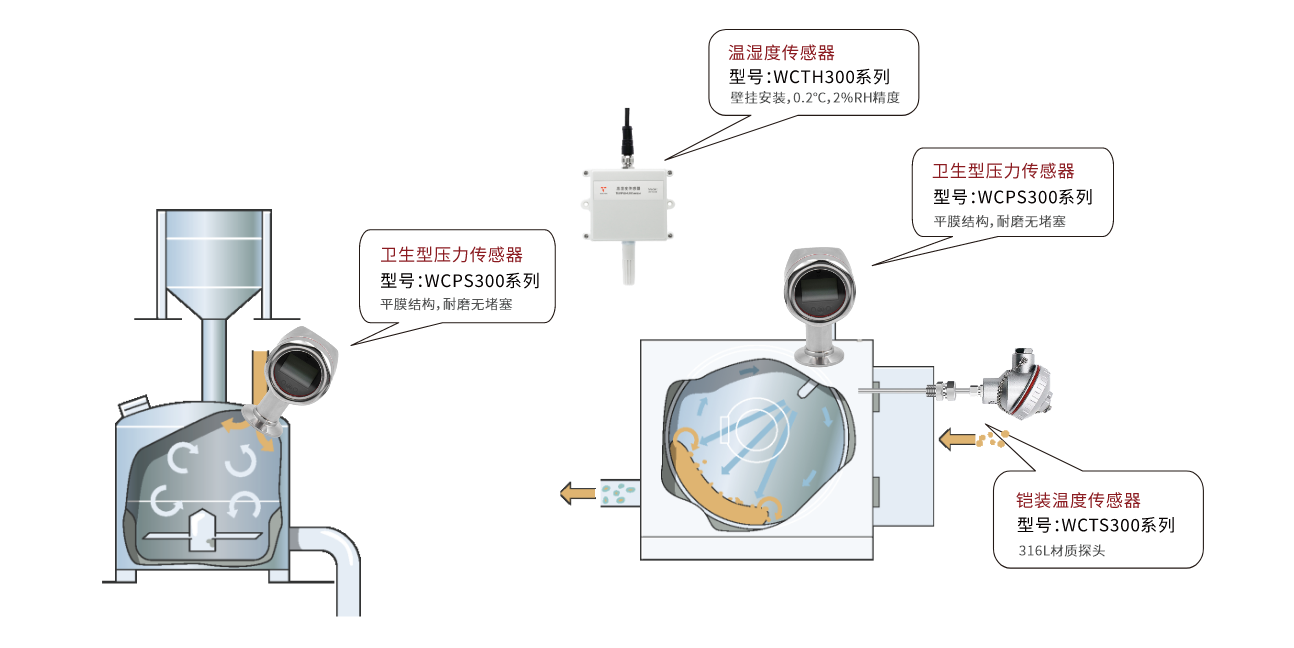 IX. Cleanrooms and glove boxes: monitoring of temperature, humidity and pressure in cleanrooms, and pressure monitoring and control for glove boxes)
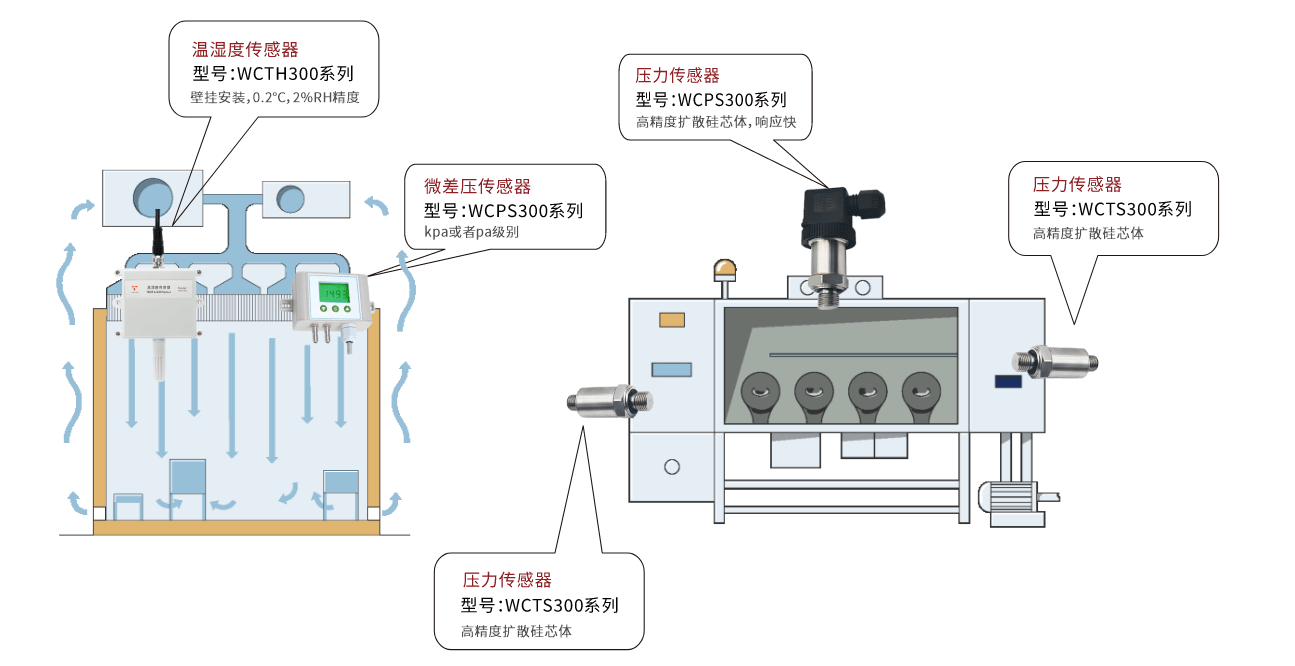
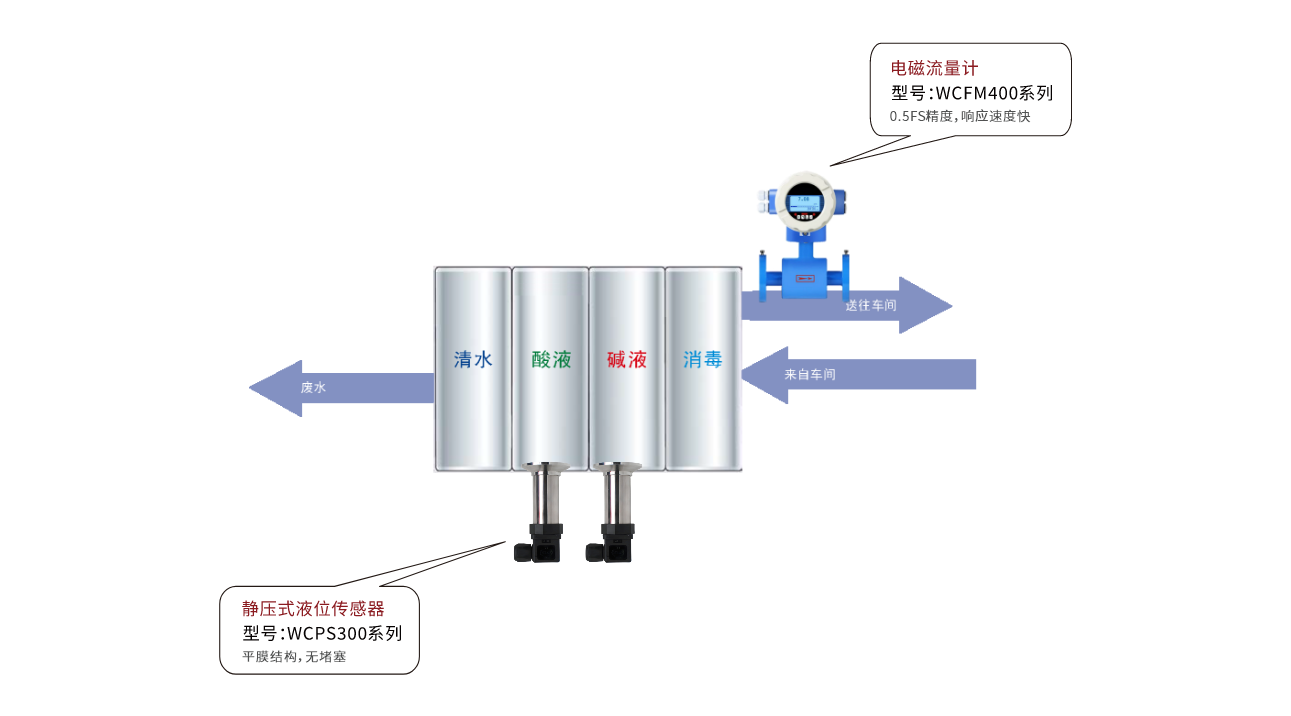
X. Cleaning (liquid level and flow monitoring and control in the chamber)